
Impact of Social Media on Society: How Digital Platforms Are Reshaping Our World
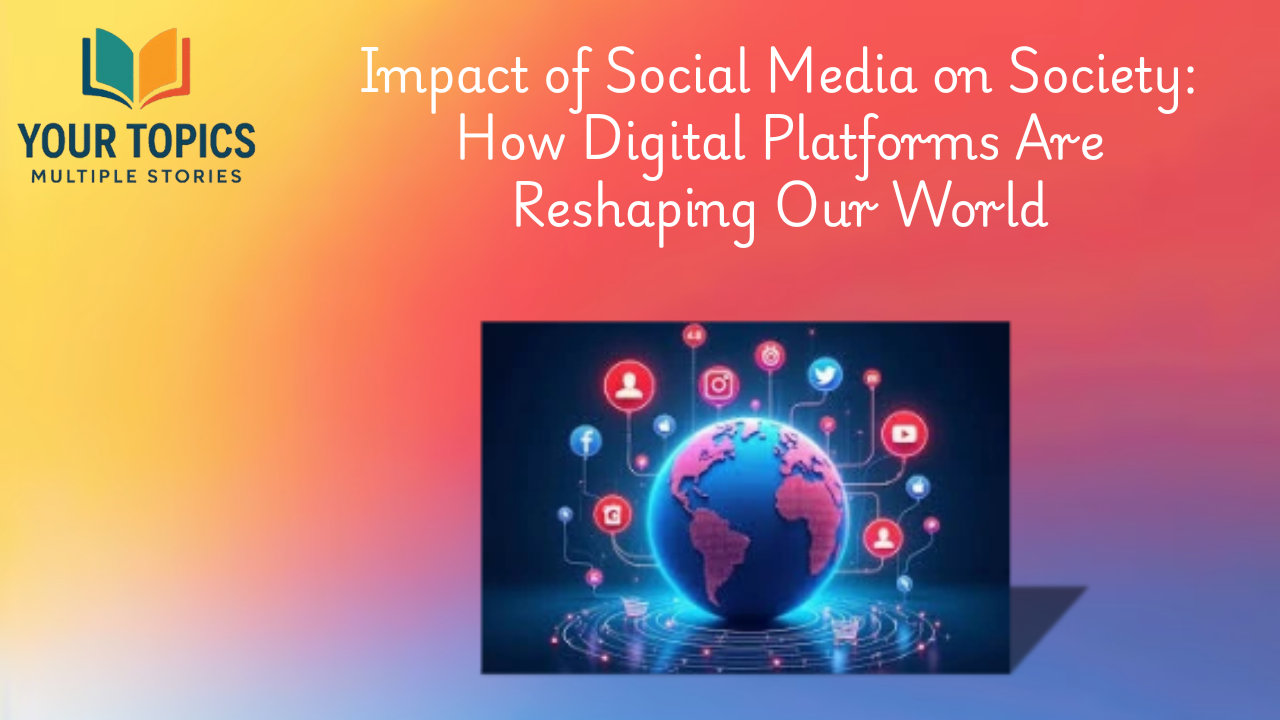
The impact of social media on society has fundamentally transformed how we communicate, work, and understand ourselves in ways that seemed impossible just two decades ago. If you’ve ever felt anxious after scrolling through Instagram, wondered why political discussions online feel so heated, or noticed your teenager seems more isolated despite having hundreds of “friends,” you’re experiencing firsthand the complex social media effects that now touch nearly every aspect of modern life.
This isn’t about nostalgia for simpler times or demonizing technology. It’s about understanding the real, measurable changes happening around us so we can navigate this digital landscape more intentionally.
The Scale of Social Media’s Reach
Before diving into specific impacts, let’s establish the scope. Over 4.9 billion people worldwide use social media platforms—that’s more than 60% of the global population. The average person spends roughly 2 hours and 23 minutes daily on these platforms, which adds up to nearly 36 days per year of our lives.
These aren’t just numbers. They represent fundamental shifts in human behavior and social organization that would have been unimaginable to previous generations.
How Social Media Psychology Affects Our Daily Lives
The Dopamine-Driven Feedback Loop
Social media platforms are engineered to capture attention. Every like, comment, and share triggers dopamine release in your brain—the same neurotransmitter associated with reward-seeking behavior. This isn’t accidental.
When you post something and check back repeatedly for reactions, you’re experiencing online behavior impact in real-time. This cycle can create compulsive checking habits that interrupt work, family time, and sleep. Research from the University of Pennsylvania found that limiting social media use to 30 minutes per day led to significant reductions in loneliness and depression among study participants.
The Comparison Trap
We’ve always compared ourselves to others—it’s human nature. But social media amplifies this tendency exponentially. You’re no longer comparing yourself to your immediate circle; you’re measuring your behind-the-scenes reality against everyone else’s highlight reel.
This creates what psychologists call “reference anxiety.” A teacher in Ohio sees colleagues posting about classroom innovations and feels inadequate. A new parent in Mumbai scrolls through perfectly curated nursery photos and questions their own choices. An entrepreneur in Lagos watches peers celebrate funding rounds and doubts their own progress.
These aren’t isolated incidents. They represent systematic social media and mental habits that affect self-esteem, body image, and life satisfaction across demographics.
Digital Culture Influence on Communication Patterns
The Evolution of Public Discourse
Remember when major news broke and you’d wait for the evening news or tomorrow’s newspaper? Now, information spreads within seconds, but so does misinformation.
Social media has democratized information sharing, giving voice to previously marginalized communities. The #MeToo movement, Black Lives Matter, and environmental activism have all leveraged these platforms to create real-world change. Citizens can now hold institutions accountable in ways that weren’t possible before.
However, this same immediacy creates problems:
- Echo chambers reinforce existing beliefs rather than challenging them
- Polarization increases as algorithms show us content that triggers engagement
- Nuance disappears when complex issues are reduced to 280 characters
- Mob dynamics can destroy reputations before facts emerge
A 2021 study from MIT found that false news stories are 70% more likely to be retweeted than true stories, and reach their first 1,500 people six times faster.
The Changing Nature of Relationships
Social media promised to connect us. In some ways, it has delivered. Families separated by continents video chat daily. Old friends reconnect. Support communities form around shared experiences.
But there’s a trade-off. A Harvard study tracking students over multiple years found that while social media use increased, their sense of social support decreased. We’re simultaneously more connected and more lonely—a paradox that defines modern digital culture influence.
Social Media Effects on Different Age Groups
Children and Adolescents: The Most Vulnerable Population
Teenagers today are the first generation growing up with social media as a constant presence. The consequences are measurable and concerning:
- Mental health crisis: Rates of anxiety and depression among teens have increased by approximately 25% since 2010, correlating with smartphone and social media adoption
- Sleep disruption: Blue light exposure and FOMO keep teens awake, with 70% of adolescents reporting using devices within an hour of bedtime
- Identity formation challenges: Developing a sense of self while constantly performing for an audience creates unique psychological pressures
- Cyberbullying: Unlike traditional bullying, this follows victims home and can involve entire peer networks
Dr. Jean Twenge’s research with over 500,000 teens found that those who spent five or more hours daily on electronic devices were 71% more likely to have suicide risk factors than those spending one hour or less.
Adults: Productivity and Professional Impacts
For working adults, social media effects manifest differently. LinkedIn has transformed professional networking and job searching. Remote work became viable partly because platforms enabled team communication across distances.
Yet workplace productivity suffers. Studies estimate the average employee loses about 2.5 hours daily to digital distractions, with social media being a primary culprit. That’s 12.5 hours per week—equivalent to losing more than a full workday every week.
Older Adults: Connection and Vulnerability
For seniors, social media offers genuine benefits: reduced isolation, easier family connection, and access to communities. A University of Michigan study found that seniors who used Facebook showed improved cognitive function compared to non-users.
However, older adults are disproportionately vulnerable to misinformation and scams spread through social platforms, partly because they didn’t grow up developing digital literacy skills.
The Business and Economic Transformation
Social media hasn’t just changed personal lives—it’s revolutionized commerce. Small businesses can now reach global audiences without massive advertising budgets. Influencer marketing has become a $16.4 billion industry. Consumer research now happens primarily through social platforms and reviews.
The creator economy enables people to monetize skills and personalities in unprecedented ways. A graphic designer in Bangladesh can build a client base worldwide. A fitness coach in Brazil can train students across continents.
But this opportunity comes with precarity. Algorithm changes can destroy livelihoods overnight. The pressure to constantly create content leads to burnout. Income instability affects mental health and long-term planning.
Real-World Comparison: Pre vs. Post Social Media Era
| Aspect | Before Social Media | After Social Media |
| News Consumption | Scheduled broadcasts, daily papers | Real-time updates, multiple sources |
| Social Circle | Geographically limited, smaller | Globally dispersed, larger but shallow |
| Privacy | Greater anonymity, clear boundaries | Diminished privacy, blurred personal/public |
| Business Marketing | Expensive, one-directional | Accessible, interactive, targeted |
| Political Engagement | Through traditional media, slower | Direct participation, rapid mobilization |
| Information Verification | Editorial gatekeepers | Crowd-sourced, often unreliable |
Strategies for Healthier Social Media Engagement
Understanding the impact is only valuable if we use that knowledge to make better choices. Here’s what actually works:
Set boundaries that stick. Use app timers, disable notifications during work or family time, and physically separate from devices during meals and before bed. These aren’t just suggestions—they’re necessary protections for mental health.
Curate consciously. Unfollow accounts that trigger negative emotions, even if they’re popular or seem productive. Follow diverse perspectives that challenge your thinking respectfully.
Practice critical consumption. Before sharing, pause and verify. Ask: Is this source credible? Does this appeal to emotion rather than facts? Am I part of spreading misinformation?
Prioritize real-world connections. Social media should supplement, not replace, in-person relationships. Video calls with friends are wonderful, but they can’t fully substitute for physical presence.
Frequently Asked Questions
How does social media affect mental health?
Research shows mixed effects depending on usage patterns. Passive scrolling (just viewing others’ content) correlates with increased depression and anxiety. Active engagement (meaningful conversations, sharing experiences) can enhance well-being. The quality of interactions matters more than quantity. Time limits—around 30 minutes daily—seem to offer the sweet spot where benefits exist without significant mental health costs.
Why is social media so addictive?
Platforms use variable reward schedules, similar to slot machines. You never know when you’ll get that satisfying like or comment, so you keep checking. Infinite scroll removes natural stopping points. Autoplay keeps content flowing. These design choices exploit psychological vulnerabilities intentionally to maximize engagement time, which translates to advertising revenue.
Can social media positively impact society?
Absolutely. Social movements have organized successfully, marginalized voices have found platforms, and communities have formed around shared struggles and interests. Crowdfunding has enabled projects that traditional funding wouldn’t support. During disasters, these platforms help coordinate relief efforts and reunite families. The tool itself is neutral—the impact depends entirely on how we use it.
How do you know if you’re addicted to social media?
Warning signs include: checking apps first thing upon waking and last thing before sleep, feeling anxious when unable to access platforms, neglecting responsibilities or relationships for online time, failed attempts to reduce usage, and using social media to escape negative emotions. If social media use interferes with work, relationships, or wellbeing, it’s worth seeking professional guidance.
What can parents do to protect children from negative social media effects?
Start with delayed access—there’s no developmental benefit to giving children social media accounts early. When they do join, maintain open conversations about what they’re experiencing online. Use parental controls not as surveillance but as training wheels. Model healthy usage yourself; children learn more from observing your behavior than your rules. Most importantly, teach critical thinking about online content, privacy, and the constructed nature of social media personas.
Looking Forward: The Future of Digital Society
The impact of social media on society continues evolving. Virtual reality platforms promise even more immersive experiences. Decentralized social networks challenge the corporate monopoly on online spaces. Regulation discussions intensify as governments grapple with content moderation, privacy, and market power.
What’s certain is that social media isn’t disappearing. We can’t return to 2003. But we can make conscious choices about how these tools shape our lives, relationships, and communities.
The most powerful thing you can do right now is audit your own relationship with these platforms. Are they serving you, or are you serving them? That question might determine not just your individual wellbeing but the kind of society we collectively build in this digital age.
Understanding these dynamics isn’t about fear or rejection of technology. It’s about wielding these powerful tools intentionally, protecting what matters most, and creating digital habits that enhance rather than diminish human flourishing. The impact of social media on society ultimately depends on millions of individual choices—including yours.