Best Story Presentation Formats: How to Turn Your Ideas Into Powerful Narratives That Captivate Audiences
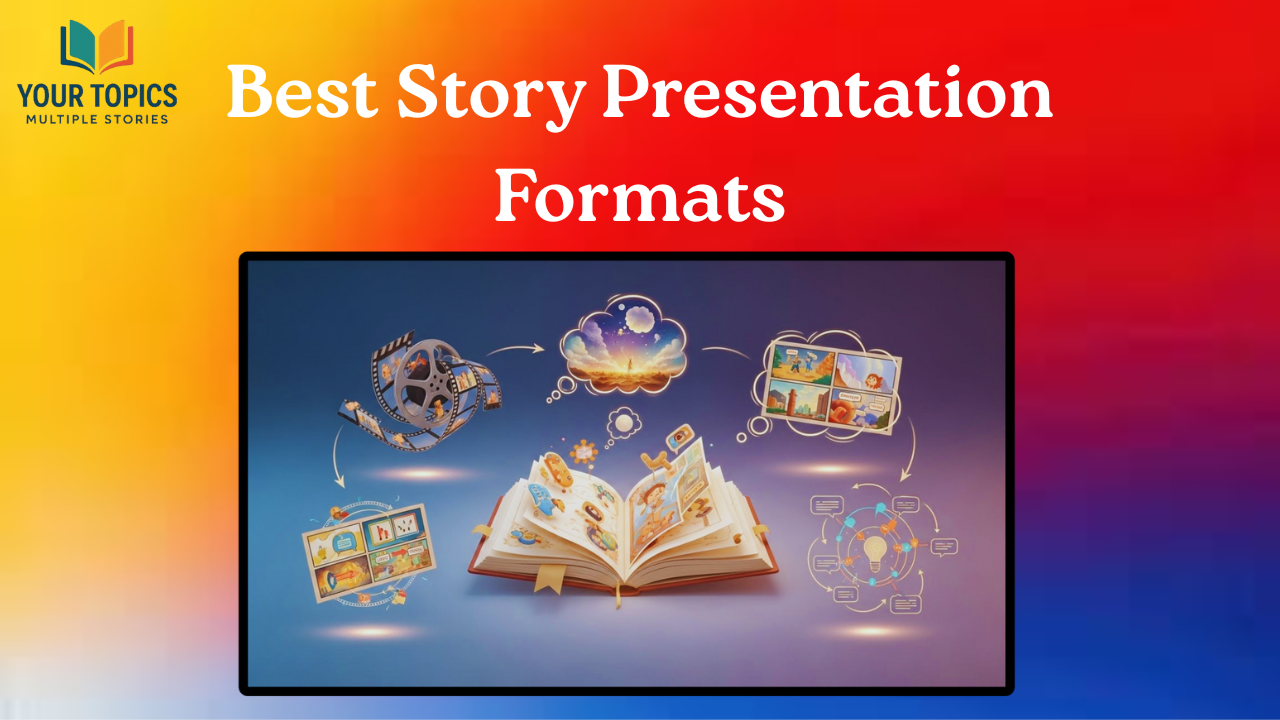
The best story presentation formats help your message connect emotionally, hold attention, and make your audience remember what you shared—whether it’s for a blog, slideshow, business pitch, classroom lesson, or digital storytelling project.
Today, most creators struggle with one big challenge:
“I have a good story… but how do I present it in a way that truly stands out?”
That’s exactly what this guide solves. You’ll discover proven formats, real examples, digital layouts, and
isual storytelling formats that professionals and top content creators use to make stories memorable and impactful.
Let’s build your storytelling power step by step.
Why Story Presentation Format Matters
Your story might be strong—but a weak format can destroy its impact.
Think about these common problems:
- The presentation feels scattered and hard to follow.
- The reader/viewer loses interest halfway through.
- The format doesn’t support emotional engagement.
- There’s no proper flow from beginning to end.
Your format is your story engine. When it’s structured right, your message becomes unforgettable. That’s why choosing the best story design format for blogs, social media, scripts, presentations, videos, or even business pitches makes all the difference.
Top Best Story Presentation Formats (With Examples)
Below are the most effective formats used across modern storytelling platforms:
Linear Format (Beginning → Middle → End)
Best for straightforward storytelling.
Use when:
- You want to explain events in sequence.
- Writing blogs, essays, biographies, or tutorials.
Example:
A day in the life of a startup founder – from idea to execution to launch.
Problem–Solution Format (Highly Used in Marketing)
Perfect for product storytelling, presentations & blogs.
Structure:
H4: Problem → Struggle → Solution → Outcome
Example:
“A business struggled with audience engagement until they switched to visual storytelling formats.”
Hero’s Journey Format (Emotional & Cinematic)
Used in movies, speeches, personal blogs, and campaigns.
Stages:
- Call to action
- Journey begins
- Challenge
- Transformation
- Return as a hero
Example:
A student battles self-doubt, takes a risk, learns a skill, and becomes a successful creator.
Multi-Perspective Format
Ideal for layered storytelling, documentaries, interviews, or journalistic blogs.
Example:
Tell one story from 3 different people’s points of view—like a doctor, patient, and caretaker.
Visual Storytelling Formats (Highly Engaging)
Use graphics, timelines, videos, infographics, audio, or illustrations.
Great for:
- Digital story layout ideas
- Business reports
- Educational content
- Blog storytelling
Tools you can use: Canva, PowerPoint, Figma, Notion, Prezi.
Comparison Table: Best Story Presentation Formats
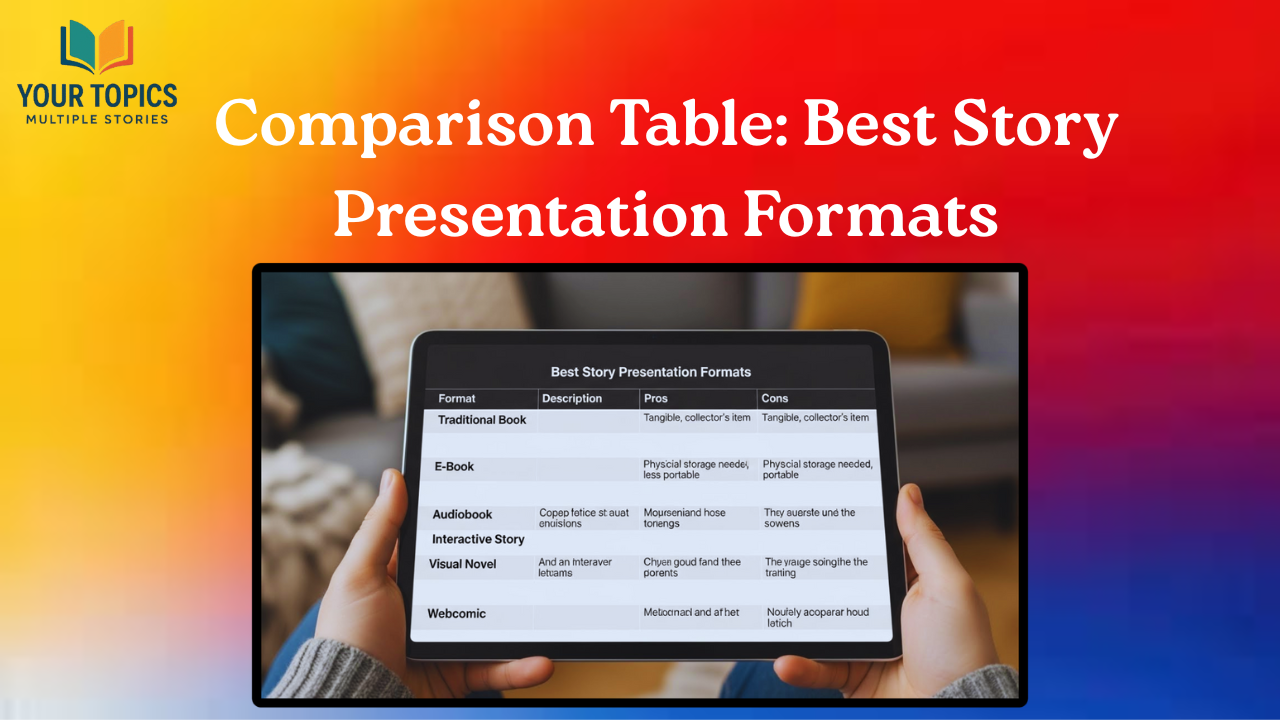
| Format | Best For | Engagement Level | Complexity |
| Linear | Blogs, history, tutorials | ★★★☆☆ | Easy |
| Problem–Solution | Marketing, sales, UX | ★★★★☆ | Medium |
| Hero’s Journey | Films, personal branding | ★★★★★ | High |
| Multi-Perspective | Documentaries, reporting | ★★★★☆ | Hard |
| Visual Formats | Presentations, education | ★★★★★ | Medium |
Story Design Formats for Blogs
When writing a blog, layout is everything. Use these narrative presentation templates:
Template 1: Emotional Hook Format
- Start with a relatable pain point
- Offer a story
- Build curiosity
- Lead to the insight
- End with takeaway/action
Template 2: Problem–Stats–Solution Format
Great for SEO blogs and case studies:
- Problem
- Supporting statistic
- Real story/example
- Clear solution
Template 3: Before vs. After Format
Show transformation:
| BEFORE | AFTER |
| Confusion | Clarity |
| No structure | Story format applied |
| Weak engagement | Strong engagement |
Digital Story Layout Ideas
Here are attention-grabbing formats for digital platforms:
| Platform | Ideal Format |
| YouTube | Hero’s journey + voiceover |
| TikTok/Reels | Rapid visual storytelling |
| Blog | Linear / problem-solution |
| Podcasts | Conversational narrative |
| Slides | 1 idea per slide format |
| Social Media | Visual snippets + captions |
Tip: Always include hooks, graphics, numbers, and questions to keep the story active and engaging.
How to Build a Powerful Story Flow
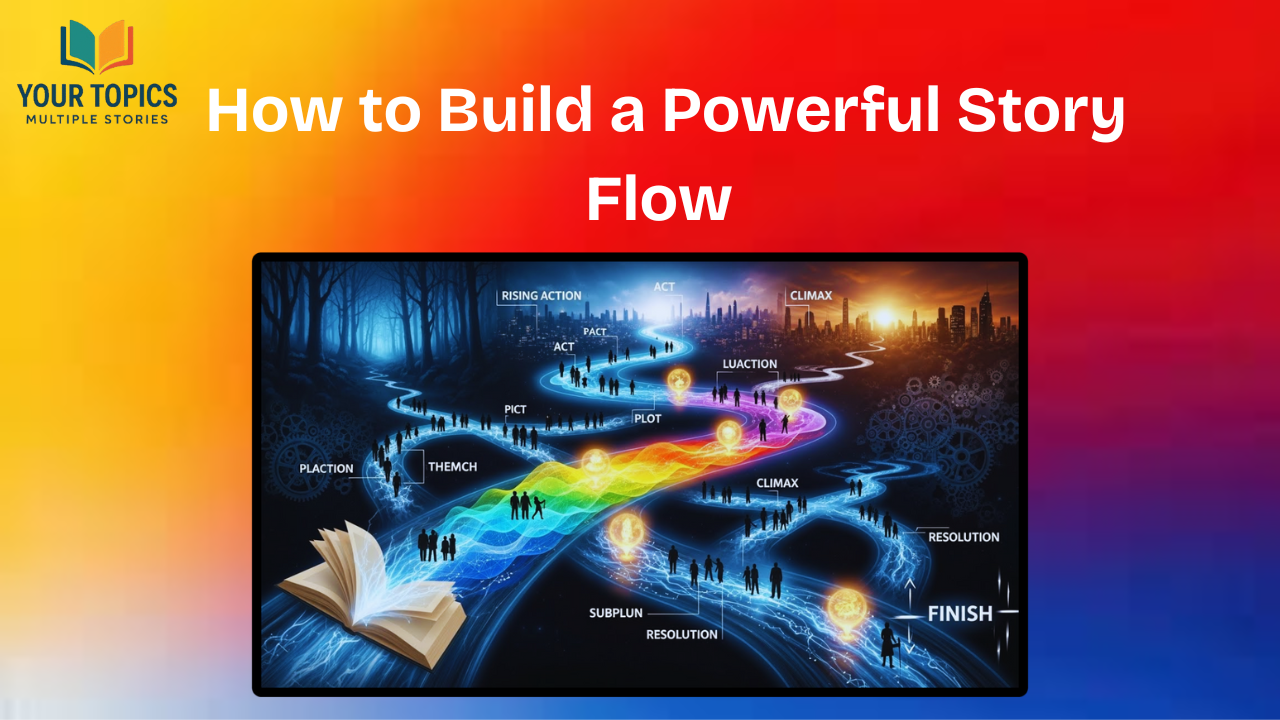
Use This Proven Framework:
Hook → Problem
Grab attention immediately.
Context → Why It Matters
Make the audience care.
Journey or Conflict
Build excitement and tension.
Resolution or Transformation
Show the result.
Call-to-Action or Lesson
Leave a strong takeaway.
Real-World Example: Story Format in Action
Let’s say you’re writing a blog about failure and success.
Bad Format:
“Failing is common. Everyone fails. You must keep trying.”
Powerful Format Using Hero’s Journey:
- I failed 7 times in 1 year.
- I almost quit.
- Then I tried one shift: storytelling.
- Today I get 50,000+ readers.
- Here’s the shift that changed my life…
See the difference? Format = impact.
Tips for Choosing Best Story Presentation Formats
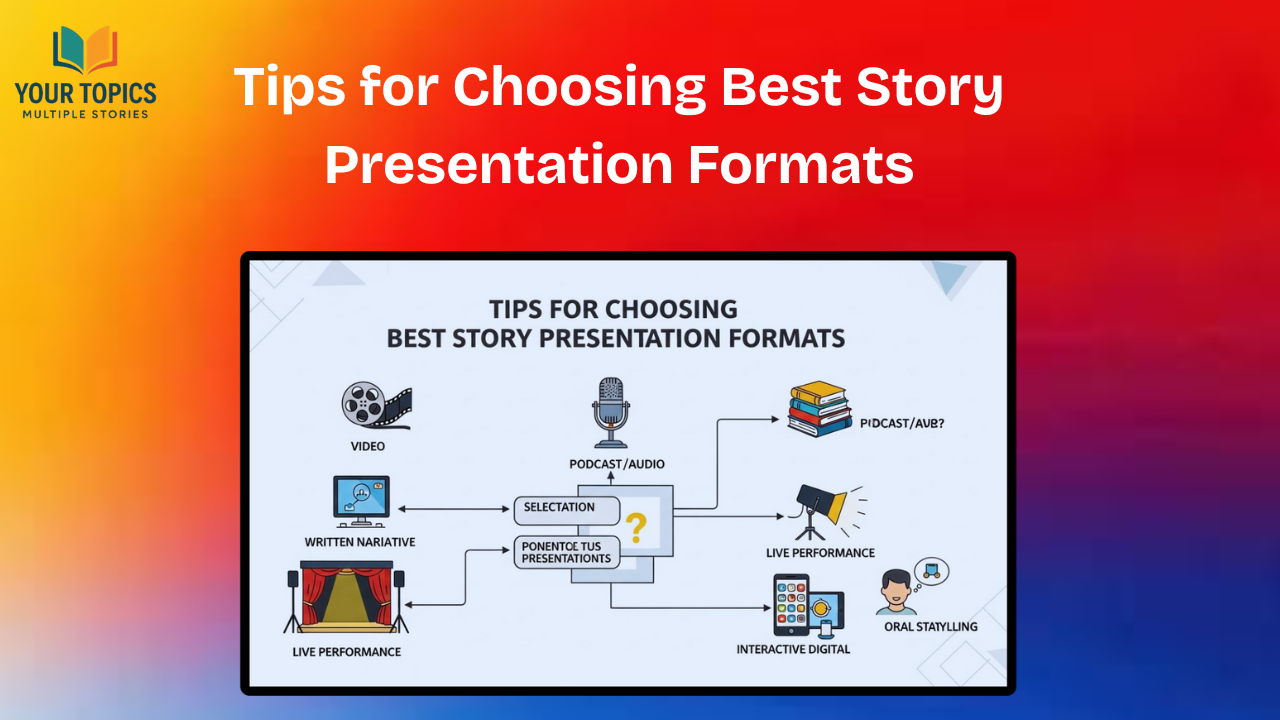
Before selecting a format, ask:
Who is my audience?
What emotion do I want to evoke?
What action do I want them to take after reading/listening?
Do I want to inform, entertain, or persuade?
Bullet Point Recap (Easy to Save & Use)
Use these when crafting your next narrative:
- Keep paragraphs short
- Use relatable struggles
- Write like you’re talking to one person
- Add visuals when possible
- Use contrast (before vs. after)
- Always end with a takeaway
- Use secondary keywords naturally
These strategies improve SEO, engagement, and readability—the three pillars of modern storytelling success.
FAQs – People Also Ask
What is the best story presentation format for blogs?
The problem–solution format works best because it matches real search intent and provides immediate value.
What are strong visual storytelling formats?
Infographics, timelines, interactive slides, motion graphics, video explainers, and illustrated stories are highly effective.
What narrative presentation templates work for business?
Use a pitch-style structure: hook → problem → data → solution → result → CTA.
How can I make digital stories more engaging?
Include visuals, suspense, emotional tone, clear character arc, and multimedia elements like sound or transitions.
What makes a format SEO-friendly?
Short paragraphs, H2 & H3 headings, user-focused language, supporting keywords, and real examples increase search rankings.
Final Thoughts: Format Is Your Superpower
A great story isn’t just told — it’s designed.
Choosing the best story presentation formats empowers you to grab attention, build emotional connection, and guide your audience toward a powerful takeaway. Whether you’re working on blogs, educational content, narratives, presentations, or digital storytelling projects—your format shapes your impact.