
Common Resume Mistakes That Stop Candidates from Getting Interviews
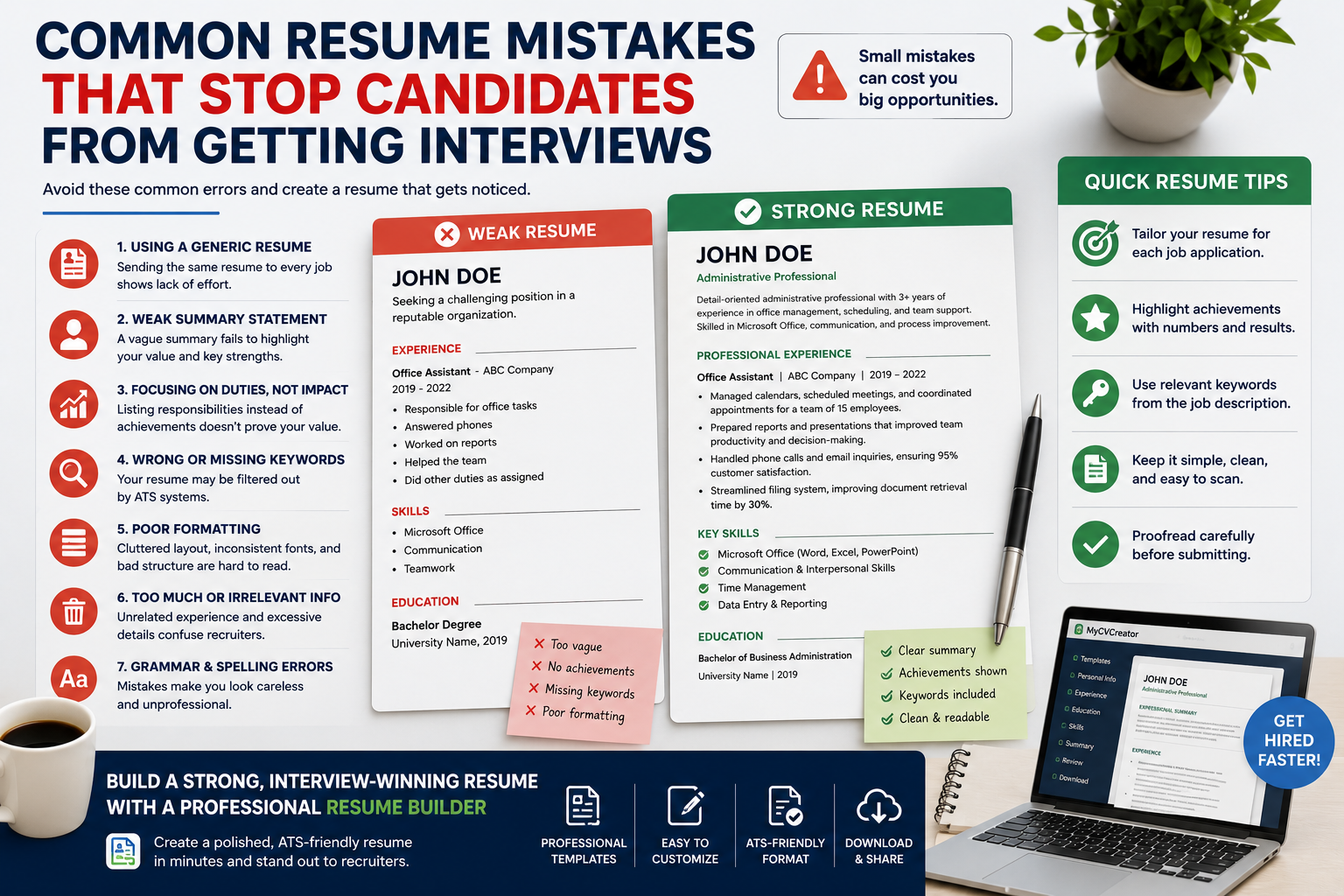
Getting interviews is one of the biggest challenges in the job search process. Many candidates apply for dozens of jobs and still hear nothing back. In many cases, the problem is not a lack of experience or ability. The real issue is that the resume is not presenting the candidate well enough.
A resume is often the first impression you make on an employer. If it is unclear, poorly structured, too generic, or full of avoidable mistakes, it may be rejected before the recruiter takes a closer look. Even highly qualified candidates can miss opportunities because their resume fails to communicate their strengths properly.
The good news is that most resume mistakes can be fixed. Once you understand what hiring managers and recruiters want to see, you can improve your resume and increase your chances of getting interviews. Using a professional Resume Builder can also make the process easier by helping you structure your information, format your content clearly, and create a polished document.
In this guide, we will look at the most common resume mistakes that stop candidates from getting interviews and how to avoid them.
Why Resume Mistakes Matter
Recruiters often review many applications in a short period of time. That means your resume must make a strong impression quickly. If it contains obvious problems, the recruiter may move on to the next applicant.
Resume mistakes can hurt you in several ways:
- They make you look unprofessional
- They hide your strengths
- They make your experience difficult to understand
- They reduce your credibility
- They confuse applicant tracking systems
- They make it harder for employers to see your fit for the role
A good resume should be clear, relevant, and easy to read. If it does not immediately show your value, you may lose the opportunity before the hiring process even begins.
1. Using a Generic Resume for Every Job
One of the most common mistakes candidates make is sending the same resume to every employer. While this may save time, it often weakens your application.
Every job is different. Even when two positions have similar titles, the required skills, responsibilities, and priorities may vary. A generic resume usually fails to address what the employer actually needs.
For example, one administrative role may focus on scheduling and communication, while another may emphasize data entry and reporting. One marketing role may require SEO and content writing, while another may focus on paid ads and analytics.
How to fix it
Tailor your resume for each role. Study the job description and identify:
- The main responsibilities
- Required skills
- Tools or software mentioned
- Important keywords
- Qualifications the employer values most
Then adjust your summary, skills, and work experience so the resume clearly matches the role. A strong Resume Builder can help you customize your resume faster without starting from scratch every time.
2. Writing a Weak or Vague Professional Summary
Your professional summary is one of the first sections employers read. If it is vague, boring, or too general, it will not help your application.
Weak example:
Hardworking individual seeking an opportunity to grow in a reputable company.
This tells the employer almost nothing. It does not mention your field, your experience, your strongest skills, or what value you bring.
How to fix it
Write a summary that clearly explains:
- Who you are professionally
- Your relevant experience
- Your strongest skills
- The value you can bring to the role
Stronger example:
Detail-oriented administrative professional with experience in scheduling, customer communication, document management, and office coordination. Skilled in Microsoft Office, data entry, and supporting daily operations with accuracy and efficiency.
This version is much stronger because it tells the recruiter what the candidate does and what strengths they bring.
3. Focusing Only on Duties Instead of Achievements
Many resumes simply list responsibilities. This is a major mistake because employers do not just want to know what you were assigned to do. They want to know how well you did it.
Weak example:
- Responsible for answering customer calls
- Managed social media accounts
- Worked with a sales team
- Helped organize files
These statements are too basic and do not show impact.
How to fix it
Focus on achievements and results. Use bullet points that explain:
- What you did
- How you did it
- What changed because of your work
Better examples:
- Handled daily customer inquiries and improved response efficiency by organizing frequent issues into clear support categories
- Managed social media content and helped increase audience engagement through regular posting and content planning
- Supported the sales team with lead tracking, follow-ups, and record updates to keep client data accurate and organized
- Reorganized office documents and improved file accessibility for faster retrieval during daily operations
A good Resume Builder can help structure these bullet points neatly so your experience looks more convincing and professional.
4. Ignoring Keywords from the Job Description
Many employers use applicant tracking systems to scan resumes. These systems often look for keywords related to the job. If your resume does not include the right terms, it may not perform well during screening.
For example, if a job description mentions:
- Customer service
- CRM software
- Problem-solving
- Microsoft Excel
- Reporting
But your resume uses vague wording that does not include these terms, the ATS may not recognize you as a strong match.
How to fix it
Read the job description carefully and identify repeated words or phrases. Then include those keywords naturally in your resume where they fit your actual experience.
Do not stuff keywords into the document randomly. Use them in context within your summary, skills, and experience sections.
A modern Resume Builder can make it easier to edit and refine your resume for specific job applications.
5. Using Poor Formatting
Even if your content is strong, poor formatting can make your resume difficult to read. Recruiters should be able to scan your resume quickly and understand it without effort.
Common formatting mistakes include:
- Inconsistent font sizes
- Too many colors
- Large blocks of text
- Poor spacing
- Misaligned sections
- Overly decorative fonts
- Crowded layouts
- Too much empty space
A messy resume can make you appear disorganized.
How to fix it
Use a clean, simple, professional layout. Your resume should have:
- Clear headings
- Consistent font style and size
- Bullet points for experience
- Proper spacing between sections
- Balanced margins
- Easy-to-read formatting
Using a Resume Builder is one of the easiest ways to avoid formatting problems because it gives you a structured template and keeps the layout consistent.
6. Including Irrelevant Information
Some candidates try to include too much information on their resume. They add every job they have ever done, every skill they have ever learned, and details that do not support the role they want.
This can make the resume feel unfocused and cluttered.
Examples of irrelevant content may include:
- Unrelated old jobs with no connection to the target role
- Outdated skills that no longer matter
- Personal details employers do not need
- Hobbies that add no value
- Long explanations of minor tasks
How to fix it
Focus on what supports the job you are applying for. Ask yourself:
- Does this help show I am a strong fit for the role?
- Does this experience strengthen my application?
- Is this skill relevant to the position?
If the answer is no, consider removing it. A strong resume is selective, not overloaded.
7. Making Grammar and Spelling Mistakes
Grammar and spelling errors can quickly damage your credibility. A recruiter may assume that you lack attention to detail or did not take the application seriously.
Even one typo can create a poor impression, especially for roles that require communication, writing, administration, or accuracy.
How to fix it
Always proofread your resume carefully. Check for:
- Spelling errors
- Grammar mistakes
- Missing words
- Repeated words
- Punctuation issues
- Inconsistent tenses
- Incorrect company names or job titles
Reading the resume aloud can help you catch awkward phrasing. You can also review it after taking a short break so you see it with fresh eyes.
A professional Resume Builder also helps reduce mistakes by keeping the structure clean and making editing easier.
8. Using an Unprofessional Email Address
This may seem like a small issue, but it matters. An unprofessional email address can make the wrong impression.
Examples of bad email formats:
- coolguy2020@email.com
- princessstar@email.com
- partyboy@email.com
These may seem informal or unserious.
How to fix it
Use a simple, professional email address based on your name, such as:
- firstname.lastname@email.com
- firstnamelastname@email.com
- firstname.lastname123@email.com
Your contact information should make you look professional and easy to reach.
9. Leaving Out Important Contact Information
If an employer likes your resume but cannot easily contact you, that becomes a serious problem. Some candidates forget to include a phone number, use an outdated email address, or leave out other important contact details.
How to fix it
Include clear and accurate contact information at the top of your resume:
- Full name
- Phone number
- Professional email address
- Location (city and country or city and state)
- LinkedIn profile, if relevant
- Portfolio or website, if relevant
Double-check everything before sending your application.
10. Using a Resume That Is Too Long
A resume that is too long can lose the recruiter’s attention. While experienced professionals may need more space, many candidates include more content than necessary.
A long resume often means:
- Repeated points
- Unnecessary details
- Too much explanation
- Outdated experience that no longer matters
How to fix it
Keep your resume focused and concise. For most job seekers, one or two pages is enough, depending on experience.
Be selective. Choose the strongest and most relevant details. Your goal is not to tell your entire life story. Your goal is to show why you are a strong fit for the role.
A Resume Builder can help you organize your content and make better use of space without creating a crowded document.
11. Using Weak Action Verbs
Resume language matters. Weak wording makes your experience sound less impressive than it really is.
Weak phrases include:
- Responsible for
- Helped with
- Worked on
- Involved in
- Did tasks such as
These do not sound strong or confident.
How to fix it
Use action verbs that show ownership and contribution. Examples include:
- Managed
- Coordinated
- Created
- Improved
- Organized
- Supported
- Analyzed
- Led
- Developed
- Delivered
- Resolved
- Implemented
For example:
Weak:
- Responsible for preparing reports
Better:
- Prepared weekly reports to support team tracking and decision-making
Strong verbs help your resume sound more professional and results-oriented.
12. Failing to Show Career Progression or Growth
Some candidates list job history without showing how they developed over time. If your resume looks flat, it may be harder for employers to see your growth, responsibility, and value.
How to fix it
Show progression where possible. This could include:
- Promotions
- Increased responsibility
- New skills learned
- Leadership roles
- Bigger projects handled
- More complex tasks over time
Example:
Instead of simply listing job titles, highlight how your role evolved:
- Started by supporting daily customer communication and later took on responsibility for training new team members and improving response organization
This tells a better career story.
13. Not Making the Resume Easy to Scan
Recruiters usually scan resumes before reading them deeply. If your content is hard to skim, you may lose attention quickly.
How to fix it
Make your resume scannable by using:
- Short paragraphs
- Bullet points
- Clear section headings
- Bold job titles
- Consistent spacing
- A logical section order
A good structure usually includes:
- Contact Information
- Professional Summary
- Skills
- Work Experience
- Education
- Certifications or Additional Sections
A Resume Builder makes this easier by providing a ready-made structure that is recruiter-friendly.
14. Listing Skills Without Proof
Many candidates write long skills sections but fail to show those skills in action. Simply saying you have communication, leadership, organization, or problem-solving skills is not enough.
How to fix it
Support your skills with evidence in your work experience.
For example:
Instead of only listing:
- Communication
- Teamwork
- Leadership
Back them up with examples like:
- Communicated with customers daily to resolve issues and provide support
- Collaborated with team members to meet weekly service goals
- Guided new staff through daily procedures and task organization
This helps employers trust your claims.
15. Choosing the Wrong Resume Template
A template should help your content stand out, not distract from it. Some candidates use templates that are too flashy, hard to read, or poorly structured.
Problems with the wrong template include:
- Too much design and too little clarity
- Sections that look crowded
- Poor alignment
- Hard-to-read text
- Overuse of colors or graphics
How to fix it
Choose a clean and professional design. A strong Resume Builder gives you access to templates that balance design and readability. The best resume templates help your experience stand out clearly while maintaining a polished look.
16. Forgetting to Tailor the Skills Section
Some resumes include a generic list of skills that does not align with the role. This can make the resume look lazy or poorly targeted.
How to fix it
Adjust the skills section based on the job. For example:
For a customer service role, highlight:
- Customer support
- Communication
- Problem-solving
- CRM software
- Complaint resolution
For a marketing role, highlight:
- Content creation
- SEO
- Social media
- Analytics
- Campaign reporting
For an administrative role, highlight:
- Scheduling
- Data entry
- Microsoft Office
- Record management
- Organization
A good Resume Builder lets you update these sections quickly for different jobs.
17. Not Using a Professional Resume Builder
Some candidates try to create resumes from scratch using random document formats, which often leads to design issues, missing sections, and inconsistency.
How to fix it
Use a reliable Resume Builder to create a structured and professional resume. A good Resume Builder can help you:
- Choose a clean template
- Organize your sections properly
- Format your resume consistently
- Save time
- Edit content easily
- Create a more polished final document
MyCVCreator helps job seekers create professional resumes quickly and confidently with easy-to-use tools designed to improve the quality of their applications.
Quick Checklist: Resume Mistakes to Avoid
Before sending your resume, check for these common problems:
- Is the resume tailored to the job?
- Does the summary clearly explain your value?
- Are your bullet points focused on achievements?
- Have you included the right keywords?
- Is the formatting clean and consistent?
- Have you removed irrelevant information?
- Is your grammar correct?
- Is your email address professional?
- Are your contact details accurate?
- Is the resume easy to scan?
- Do your listed skills match the role?
- Are you using a strong and professional template?
This checklist can help you catch issues before they affect your job search.
Why a Resume Builder Can Make a Big Difference
A professional Resume Builder is useful because it solves many of the mistakes discussed in this guide. Instead of struggling with formatting, layout, and structure, you can focus on the quality of your content.
A Resume Builder helps you:
- Create a polished layout
- Use recruiter-friendly templates
- Organize your experience clearly
- Present your skills professionally
- Update your resume more easily
- Build confidence before applying
If you want a better chance of getting interviews, your resume needs more than information. It needs strong presentation. That is why a good Resume Builder can be an important part of your job search strategy.
Final Thoughts
A strong resume can open doors, but a weak one can quietly close them before you even realize it. Many candidates miss interviews not because they are unqualified, but because their resume contains mistakes that reduce its impact.
The most common problems include using a generic resume, writing vague summaries, listing duties instead of achievements, ignoring keywords, using poor formatting, including irrelevant details, and failing to proofread. These mistakes may seem small, but together they can seriously weaken your application.
The good news is that these problems can be fixed. By improving your content, tailoring your resume to each job, and using a professional Resume Builder, you can create a stronger, clearer, and more effective resume.
MyCVCreator helps job seekers build professional resumes that are clean, well-structured, and ready to make a strong impression. With the right tools and the right approach, you can avoid common resume mistakes and give yourself a better chance of getting the interviews you deserve.