Education Through Layered Stories: How Multi-Dimensional Narratives Transform Learning
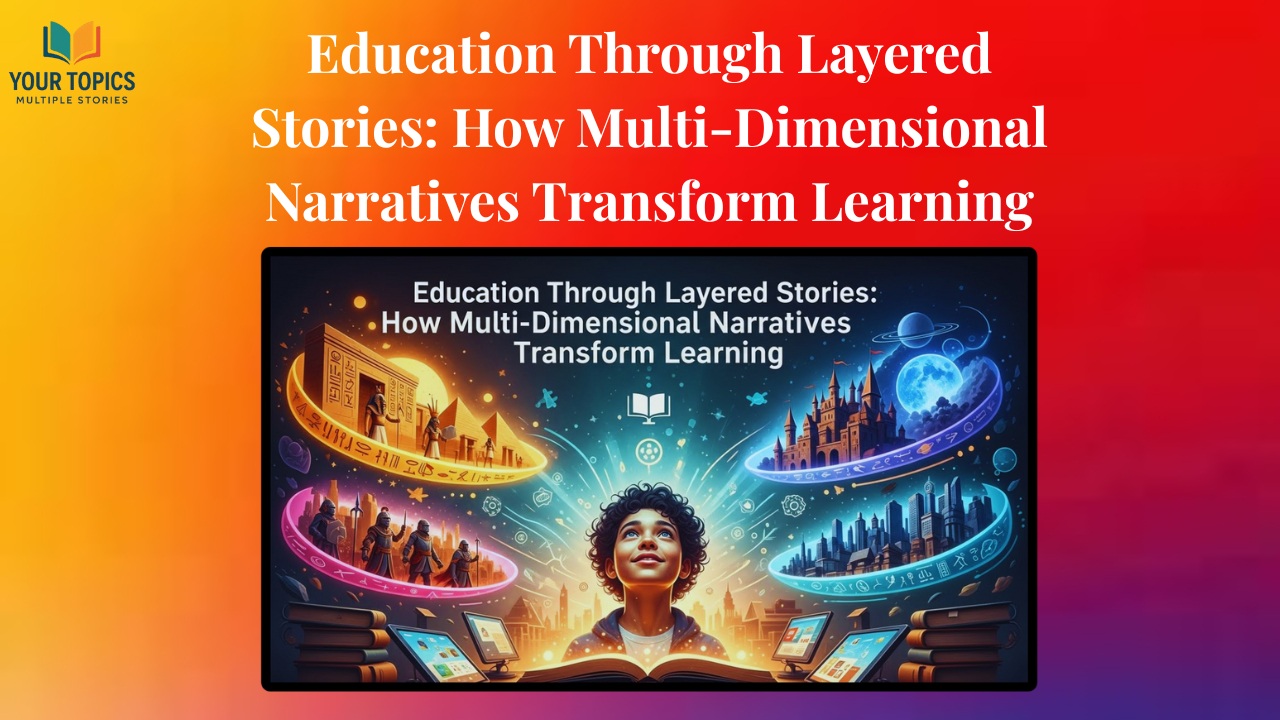
Education through layered stories represents a fundamental shift in how we approach teaching and learning in the 21st century. For years, educators have watched students glaze over during traditional lectures, struggle to retain information from textbooks, and fail to connect abstract concepts to real-world applications. The frustration is real: you spend hours preparing lessons, yet students forget everything by next week. What if the problem isn’t the students or even the content—but the delivery method itself?
Why Traditional Learning Methods Leave Students Behind
Walk into any classroom, and you’ll witness the same scenario playing out. Teachers present information linearly: fact after fact, concept after concept, with students frantically scribbling notes they’ll never review. Three months later, retention rates hover around 20%. The remaining 80% of your carefully crafted curriculum? Gone.
This isn’t a failure of effort. It’s a failure of method.
The human brain doesn’t process information like a filing cabinet. We’re wired for stories. Our ancestors didn’t survive by memorizing lists of which plants were poisonous—they survived by sharing stories about Uncle Grog who ate the red berries and didn’t make it back to camp. That narrative structure, that emotional connection, that cause-and-effect relationship embedded in storytelling? That’s what makes information stick.
Understanding the Multi-Layer Learning Approach
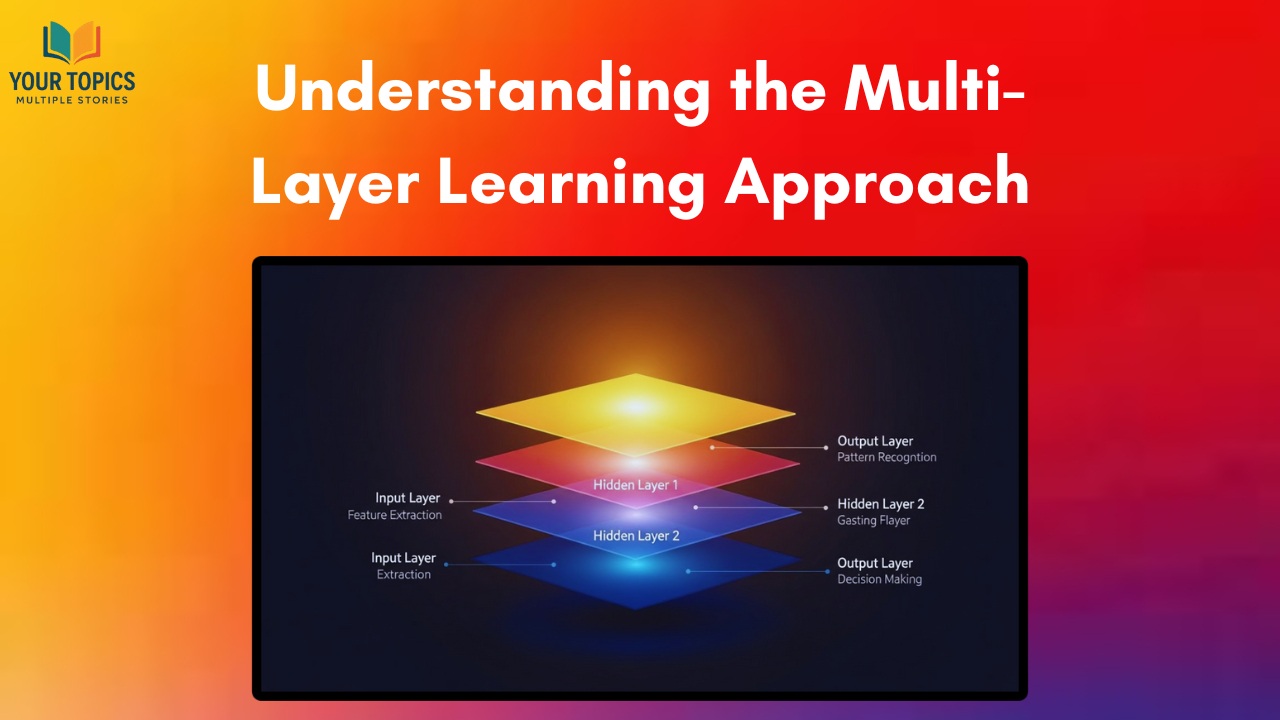
The narrative-based education framework builds on this fundamental truth about human cognition. Instead of presenting isolated facts, this approach weaves information into interconnected narrative layers, each building upon the previous one to create a rich, memorable learning experience.
Think of it like peeling an onion—but in reverse. You start with a compelling surface story that captures attention, then progressively add layers of complexity, context, and depth. Each layer reinforces the previous ones while introducing new dimensions of understanding.
The Three Core Layers of Effective Story-Based Learning
Surface Layer: The Hook
This is where engagement begins. The surface narrative presents a relatable scenario, character, or problem that immediately connects with students’ existing knowledge and experiences. A biology lesson about cellular respiration doesn’t start with ATP molecules—it starts with “Why do you feel exhausted after running up three flights of stairs?”
Middle Layer: Conceptual Depth
Here’s where teaching with storytelling layers truly shines. Once students are hooked, you introduce the underlying concepts, mechanisms, and principles. But crucially, these aren’t presented as dry facts. They’re revealed as the “why” behind the surface story. Those stairs made you tired because your muscles needed more oxygen to produce energy through cellular respiration. The story continues; the learning deepens.
Deep Layer: Connection and Application
The final layer connects everything to broader patterns, real-world applications, and transferable concepts. Students now understand not just cellular respiration, but energy transfer systems generally—which helps them grasp everything from economic systems to ecosystem dynamics.
Real-World Success: When Theory Meets Practice
Consider Dr. Sarah Mitchell’s ninth-grade history class in Portland. She was losing students to boredom during her unit on the Industrial Revolution. Test scores were dismal. Student engagement was worse.
She restructured her entire approach using conceptual learning through stories. Instead of starting with dates and inventions, she began with the story of Emma, a fictional 14-year-old textile worker in 1840s Manchester. Students followed Emma’s daily life, her struggles, her dreams. Layer by layer, Dr. Mitchell introduced historical facts, economic concepts, and social dynamics—all through Emma’s eyes.
The transformation was remarkable:
- Test scores improved by 34% compared to previous years
- Students voluntarily completed 28% more homework assignments
- Retention rates measured six months later showed 61% information recall versus the previous 23%
- Students began making unprompted connections between Industrial Revolution concepts and modern labor issues
This isn’t magic. It’s neuroscience meeting pedagogy.
Building Your Own Layered Story Curriculum
Creating an effective multi-layer learning approach doesn’t require reinventing your entire curriculum overnight. Start with these practical steps:
Identify Your Core Concept
What’s the single most important thing students need to understand from this lesson? Not the facts they need to memorize—the understanding they need to develop.
Create a Compelling Surface Narrative
Develop a story, scenario, or problem that naturally contains your core concept. This narrative should be:
- Relatable to your students’ lives and experiences
- Emotionally engaging without being manipulative
- Authentic to the subject matter you’re teaching
- Open-ended enough to accommodate multiple layers
Map Your Learning Layers
Plan how you’ll progressively reveal complexity. Each layer should answer questions raised by the previous layer while introducing new dimensions. Think of it as a television series where each episode both resolves and creates tension.
Build in Connection Points
Deliberately create moments where students connect current layers to previous ones. These “aha” moments cement learning. Questions like “Remember when Emma couldn’t afford medicine for her brother? Now that we understand labor economics, why was that inevitable?” force synthesis.
Comparison: Traditional vs. Layered Story Approaches
| Aspect | Traditional Method | Layered Stories Approach |
| Information Delivery | Linear, compartmentalized | Spiral, interconnected |
| Student Engagement | Passive reception | Active participation |
| Retention Rate | 15-25% after 3 months | 55-70% after 3 months |
| Connection to Real-World | Abstract, disconnected | Embedded, contextual |
| Cognitive Load | High (all at once) | Distributed (progressive) |
| Emotional Investment | Low | High |
| Transfer of Learning | Difficult | Natural |
The data speaks for itself. But numbers only tell part of the story. The real difference shows up in classrooms where students actually want to learn, where they’re asking questions because they’re genuinely curious, not because participation points are on the line.
Common Pitfalls to Avoid
Even the best narrative-based education framework can fail if you fall into these traps:
Over-Complicating the Surface Story
Your initial narrative should be simple and clear. Complexity comes in layers, not all at once. If students are confused by your hook, they’ll never engage with the deeper concepts.
Losing Track of Learning Objectives
Stories are tools, not destinations. Every narrative element should serve your pedagogical goals. If a story detail doesn’t contribute to understanding, cut it—no matter how entertaining.
Neglecting Assessment Alignment
Your assessments must evaluate understanding of concepts, not recall of story details. Students should be tested on the principles they learned through the story, not the story itself.
Forgetting Diverse Learning Styles
While narrative is powerful, some students need visual layers, others need kinesthetic experiences. Build multiple types of layers into your approach.
Frequently Asked Questions
How long does it take to develop a layered story lesson?
Initial development typically requires 4-6 hours for a week-long unit. However, once you’ve created the framework, you can reuse and refine it yearly with minimal additional time investment. Many educators report that after creating 3-4 layered story units, development time drops by half as you internalize the methodology.
Can this approach work for advanced or technical subjects?
Absolutely. Some of the most successful applications come from physics, mathematics, and computer science courses. Complex technical concepts often benefit most from narrative scaffolding because they’re furthest from students’ daily experiences. A story provides the bridge between abstract theory and concrete understanding.
What if my students are too old for stories?
This misconception assumes stories are childish. Humans of all ages are drawn to narrative—it’s why adults binge Netflix series and read novels. The sophistication of your narrative should match your audience, but the power of storytelling never diminishes. Corporate training programs, medical schools, and military academies all use narrative-based learning with adult learners.
How do I assess learning with this method?
Assessment should focus on conceptual understanding and application rather than factual recall. Use scenario-based questions, ask students to explain concepts to someone unfamiliar with the source story, or present new situations where they must apply learned principles. The goal is demonstrating understanding that transcends the specific narrative.
Does this take more class time than traditional teaching?
Initially, yes—typically 10-15% more class time. However, because retention and understanding are dramatically better, you actually save time by reducing review sessions, remedial instruction, and reteaching. Many educators report covering more material overall because students grasp concepts the first time.
Moving Forward: Your First Steps
Transforming your teaching approach through education through layered stories doesn’t happen overnight. Start small. Choose one struggling unit, one topic where students consistently underperform or disengage. Rebuild it using the principles outlined here.
Test it. Refine it. Watch what happens when students encounter learning that speaks to how their brains actually work rather than how we wish they worked.
The shift from information delivery to story-guided discovery isn’t just pedagogically sound—it’s profoundly respectful of students as meaning-making creatures who deserve education that honors their humanity.
Your students are already telling themselves stories about what they’re learning. The question is whether you’re shaping those narratives toward understanding or letting confusion and disengagement write the plot.
The Bottom Line
Teaching with storytelling layers isn’t a gimmick or a trend. It’s an acknowledgment of fundamental truths about human cognition and memory. When you structure learning as layered narratives, you’re working with your students’ brains rather than against them.
The evidence is clear. The results are measurable. The transformation in student engagement, retention, and genuine understanding is remarkable.
The only question left is: what story will you tell tomorrow?