
Effective Study Techniques: The Complete Guide to Learning Smarter, Not Harder

Effective study techniques can transform your academic performance from struggling to thriving, yet most students waste countless hours using methods that science has proven ineffective. You’re not alone if you’ve ever spent an entire night cramming for an exam, only to forget everything within days. The frustration of rereading textbooks five times, highlighting every other sentence, and still feeling unprepared is a reality millions of students face daily.
The difference between students who excel and those who struggle often isn’t intelligence—it’s strategy. Let me share what actually works based on cognitive science research and real-world results.
Why Traditional Study Methods Fail Most Students
Here’s an uncomfortable truth: the study habits you probably learned in school are setting you up for failure. Passive rereading, marathon study sessions, and last-minute cramming feel productive but deliver minimal long-term retention. Research from cognitive psychology shows these methods create an “illusion of competence”—you feel like you’re learning when you’re actually just becoming familiar with the material.
The best study methods work with your brain’s natural learning mechanisms, not against them. When you understand how memory formation actually functions, you can stop wasting time on ineffective techniques and start seeing real progress.
The Science-Backed Best Study Methods That Actually Work
Active Recall: Your Most Powerful Learning Tool
Active recall is the practice of retrieving information from memory without looking at your notes or textbook. Instead of passively reviewing material, you force your brain to work for the answer. This struggle is precisely what builds strong neural pathways and long-term retention.
How to implement active recall:
- Close your textbook and write down everything you remember about a topic
- Use flashcards (physical or digital) with questions on one side and answers on the other
- Take practice tests before you feel ready
- Explain concepts out loud as if teaching someone else
- Create your own questions from lecture notes and answer them later
When I started using active recall during my university years, my exam scores jumped an entire letter grade within one semester. The technique felt harder initially—that’s the point. The difficulty is what creates lasting learning.
Spaced Repetition: The Memory Improvement Study Breakthrough
Spacing your study sessions over time dramatically improves retention compared to cramming. This technique leverages the “spacing effect,” where your brain better consolidates memories when you review material at increasing intervals.
Practical spaced repetition schedule:
Start reviewing new material within 24 hours, then revisit it after 3 days, then 7 days, then 2 weeks, and finally after one month. Each review session should be brief—just long enough to successfully recall the information. This study planning technique ensures knowledge moves from short-term to long-term memory efficiently.
Real-world example: Medical students who used spaced repetition for anatomy retained 80% of material after six months, compared to just 30% retention for those who used massed practice (cramming).
The Pomodoro Technique: Focus Improvement Tips That Work
Maintaining concentration for hours is biologically impossible for most people. The Pomodoro Technique breaks study time into 25-minute focused intervals followed by 5-minute breaks. After four “pomodoros,” take a longer 15-30 minute break.
This method works because it matches your brain’s natural attention span and prevents mental fatigue. During those 25 minutes, you’re completely focused on one task—no phone, no social media, no multitasking.

Creating Your Optimal Study Environment
Your environment directly impacts your ability to concentrate and retain information. Here’s what matters:
Physical setup considerations:
- Consistent study location that your brain associates with focus
- Adequate lighting (natural light when possible)
- Comfortable temperature between 68-72°F
- Minimal visual distractions
- All necessary materials within reach to avoid interruptions
I’ve coached dozens of students who struggled with focus, and nearly every time, environmental factors were sabotaging their efforts. One student couldn’t understand why she couldn’t concentrate until we realized her desk faced a window overlooking a busy street. Simply rotating her desk eliminated 70% of her distraction issues.
The Power of Interleaving Practice
Instead of studying one subject or topic for hours (blocked practice), interleaving means mixing different topics or problem types within a single study session. This technique feels more challenging but produces superior long-term learning and problem-solving ability.
For example, if you’re studying math, solve three algebra problems, then switch to two geometry problems, then one calculus problem, and repeat. This forces your brain to constantly retrieve the appropriate strategies rather than applying the same formula repeatedly on autopilot.
Note-Taking Methods That Enhance Understanding
Taking effective notes is itself a study technique. The Cornell Note-Taking System divides your page into three sections: a narrow left column for cues and questions, a wide right column for notes during class, and a bottom section for summarizing.
After class, use your notes as an active recall tool by covering the right column and trying to answer the questions in the left column from memory. This transforms passive notes into an active learning resource.
Comparison: Effective vs. Ineffective Study Techniques
| Effective Techniques | Ineffective Techniques | Why It Matters |
| Active recall through self-testing | Passive rereading | Active retrieval strengthens memory pathways 10x more effectively |
| Spaced repetition over weeks | Cramming in single sessions | Spaced learning produces 200% better retention after one month |
| Interleaving different topics | Blocking identical problems | Interleaving improves transfer of knowledge to new situations |
| Teaching concepts to others | Highlighting text excessively | Teaching requires deep understanding, highlighting is passive |
| Practice testing before feeling ready | Waiting until “fully prepared” | Early testing identifies gaps and strengthens weak areas |
Weekly Study Planning Framework
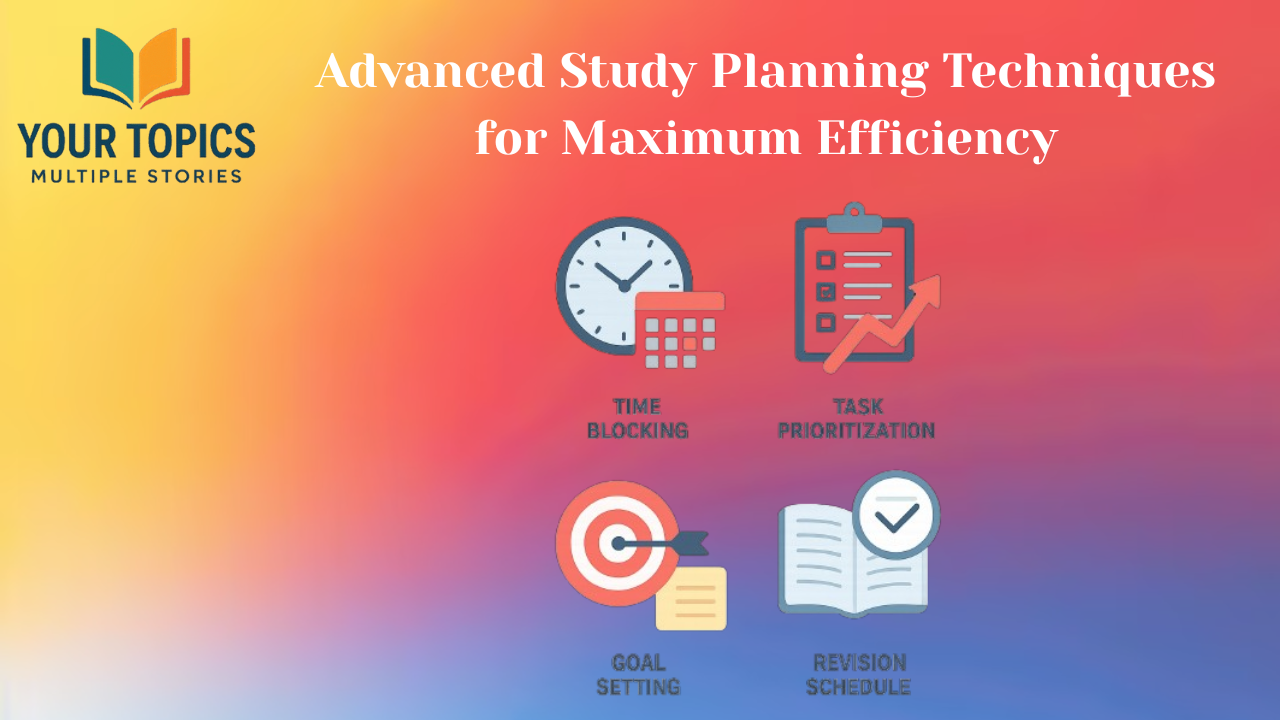
Successful students don’t just study harder—they plan strategically. Dedicate Sunday evening or Monday morning to mapping your week:
Step-by-step planning process:
- List all assignments, tests, and deadlines for the upcoming week
- Estimate time needed for each task (then add 50% more time)
- Block specific time slots in your calendar for each subject
- Schedule your most challenging subjects during your peak mental energy hours
- Build in buffer time for unexpected issues
Most students overestimate what they can accomplish in one study session and underestimate how long tasks actually take. By planning realistically, you reduce stress and improve consistency.
Prioritizing Using the Eisenhower Matrix
Not all study tasks deserve equal time. Categorize tasks into four quadrants:
- Urgent and important: Exam tomorrow, paper due soon
- Important but not urgent: Regular review, long-term project work
- Urgent but not important: Minor assignments that won’t significantly impact your grade
- Neither urgent nor important: Busy work that can be minimized
Focus 70% of your study time on important but not urgent tasks. This is where real learning happens and where you build the foundation for long-term academic success.
Memory Improvement Study Strategies
The Method of Loci (Memory Palace)
This ancient technique uses spatial memory to remember information. Associate facts with specific locations in a familiar place—your house, your commute route, or your campus.
To remember a list of historical events, visualize walking through your home and placing each event at a specific location. The American Revolution happens at your front door, the Constitution is signed on your couch, the War of 1812 occurs in your kitchen. When you need to recall the sequence, mentally walk through your house.
Elaborative Interrogation
This technique involves asking yourself “why” and “how” questions about the material you’re studying. Instead of just memorizing that “mitochondria are the powerhouses of the cell,” ask yourself why cells need powerhouses, how mitochondria generate energy, and what would happen if they stopped functioning.
This deeper processing creates more neural connections, making the information easier to retrieve later and more useful for application.
Frequently Asked Questions About Effective Study Techniques
How many hours should I study per day?
Quality matters more than quantity. Most research suggests 2-4 hours of focused, active studying produces better results than 8 hours of passive reviewing. Use productive learning habits like Pomodoro sessions to maximize efficiency rather than maximizing time.
What’s the best time of day to study?
This varies by individual chronotype. Morning people retain information best between 9 AM-noon, while night owls peak at 4 PM-10 PM. Schedule your most challenging subjects during your personal peak hours and save easier tasks for low-energy periods.
How can I stay motivated when studying feels overwhelming?
Break large goals into tiny, achievable milestones. Instead of “study for biology exam,” make your goal “complete 20 flashcards using active recall.” Celebrate small wins, use focus improvement tips like the Pomodoro Technique, and remember that consistency beats intensity.
Should I study in groups or alone?
Both have value. Study alone first to build foundational knowledge through active recall and practice. Then join study groups to teach concepts to others, discuss difficult topics, and expose yourself to different perspectives. Teaching others is one of the most powerful memory improvement study techniques available.
How do I know if my study techniques are working?
Test yourself frequently using practice exams or self-generated questions. If you can recall and apply information without reference materials, your techniques are effective. If you feel confident while studying but struggle on tests, you’re using ineffective methods that create an illusion of competence.
Taking Action: Your Next Steps

The gap between knowing effective study techniques and actually using them determines your academic success. Start small—choose one technique from this guide and implement it for two weeks before adding another. I recommend beginning with active recall since it has the highest impact with relatively simple implementation.
Remember that effective studying feels difficult at first. That cognitive strain is exactly what builds lasting learning. The students who push through initial discomfort and trust the science-backed methods consistently outperform their peers who stick with comfortable but ineffective habits.
Your academic potential isn’t limited by intelligence—it’s limited by the techniques you’re currently using. Make the change today, and you’ll see results in weeks, not months.